Security Questionnaires Are the New Enterprise Sales Bottleneck
When founders talk about sales friction, they usually point to pricing negotiations or legal redlines. But in modern SaaS, especially when selling into mid-market or enterprise buyers, there's another gate that quietly slows deals down: security review.
It doesn't look dramatic. It looks like a spreadsheet.
That spreadsheet can determine whether your deal closes this quarter or slips to the next.
Security review has become a formal gate
Five years ago, smaller SaaS vendors could often pass security review with a lightweight document exchange. Today, even mid-sized buyers send detailed vendor assessments that probe deeply into controls, monitoring, logging, and vendor risk management.
This shift isn't accidental. Procurement and security teams have matured their processes. They reuse standardized templates, compare vendors side-by-side, and expect consistent documentation.
That means your responses aren't just being read, they're being evaluated against competitors.
The hidden cost to small teams
For a 10-50 person SaaS company, questionnaires rarely land on a dedicated compliance department. They land on the Sales Engineer, the CTO, or the founder.
That means hours spent:
- Searching for documentation
- Reconciling slightly different past answers
- Rewriting responses
- Double-checking policies
This isn't just busywork. It's opportunity cost. Every hour spent formatting Excel is an hour not spent building product, supporting customers, or closing the next deal.
The consistency problem
Inconsistent answers can quietly damage credibility.
If one questionnaire says logs are retained for 90 days and another says 180 days, even if both are technically defensible, it creates confusion. Security reviewers notice these discrepancies, and they slow things down.
Consistency signals maturity. Mature vendors don't contradict themselves. They present a clear, repeatable security posture.
Why this trend is accelerating
Three forces are pushing security reviews to become more rigorous:
- Vendor risk expectations are rising. Even smaller companies are under pressure from their customers to vet vendors thoroughly.
- Standardized templates are spreading. Popular questionnaires get reused across industries.
- Automation is increasing on the buyer side. Some procurement teams now use tools to detect incomplete or inconsistent responses. Sloppy answers are easier to spot than ever before.
The workflow gap
Many teams try to solve questionnaire fatigue by investing in compliance automation platforms. Those tools are valuable for tracking controls and evidence, but they don't always address the day-to-day workflow of filling out spreadsheets.
The friction often lives in:
- Parsing questions
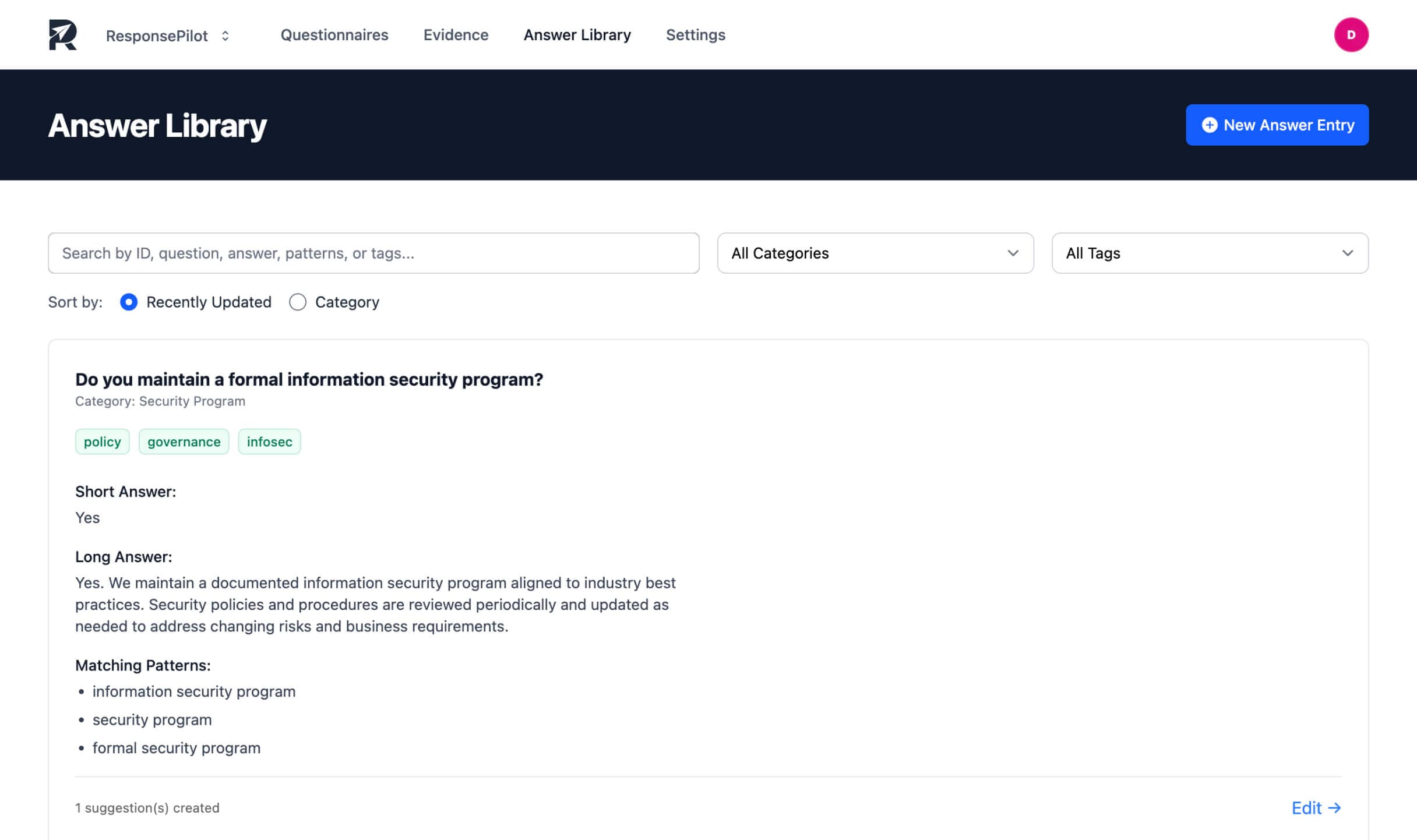
- Matching to approved answers
- Attaching supporting documentation
- Preserving the original format
- Exporting cleanly
That's not a policy problem. It's a workflow problem.
The opportunity for teams that get it right
If you can move through security review faster than competitors, you gain leverage. Faster responses signal organization. Clean exports signal professionalism. Evidence-backed answers signal maturity.
In competitive deals, small signals matter.
Security questionnaires aren't glamorous. They don't show up in product announcements. But they are part of modern enterprise infrastructure. The companies that handle them efficiently remove friction from revenue.
The ones that don't keep scrambling every time a spreadsheet lands in their inbox.