How to Respond to Vendor Security Questionnaires (Without Losing a Day in Excel)
If you sell B2B SaaS, vendor security questionnaires are part of the deal process whether you like it or not. They usually show up right when momentum is building - after pricing discussions, after technical validation, when you're starting to think the deal is close. Then procurement sends over a spreadsheet with 150-300 questions, and suddenly someone on your team is blocked for half a day.
The frustrating part isn't that the questions are new. Most of them aren't. They're the same core controls - encryption, MFA, incident response, logging, vendor management - just phrased slightly differently. The real pain comes from having to rediscover answers that already exist somewhere in your organization.
Here's how high-performing SaaS teams handle these without treating each questionnaire like a fire drill.
Step 1: Stop starting from scratch
The biggest inefficiency is psychological. Every time a questionnaire arrives, it feels unique. But if you compare three vendor assessments side by side, you'll find that 60-80% of the questions are near duplicates.
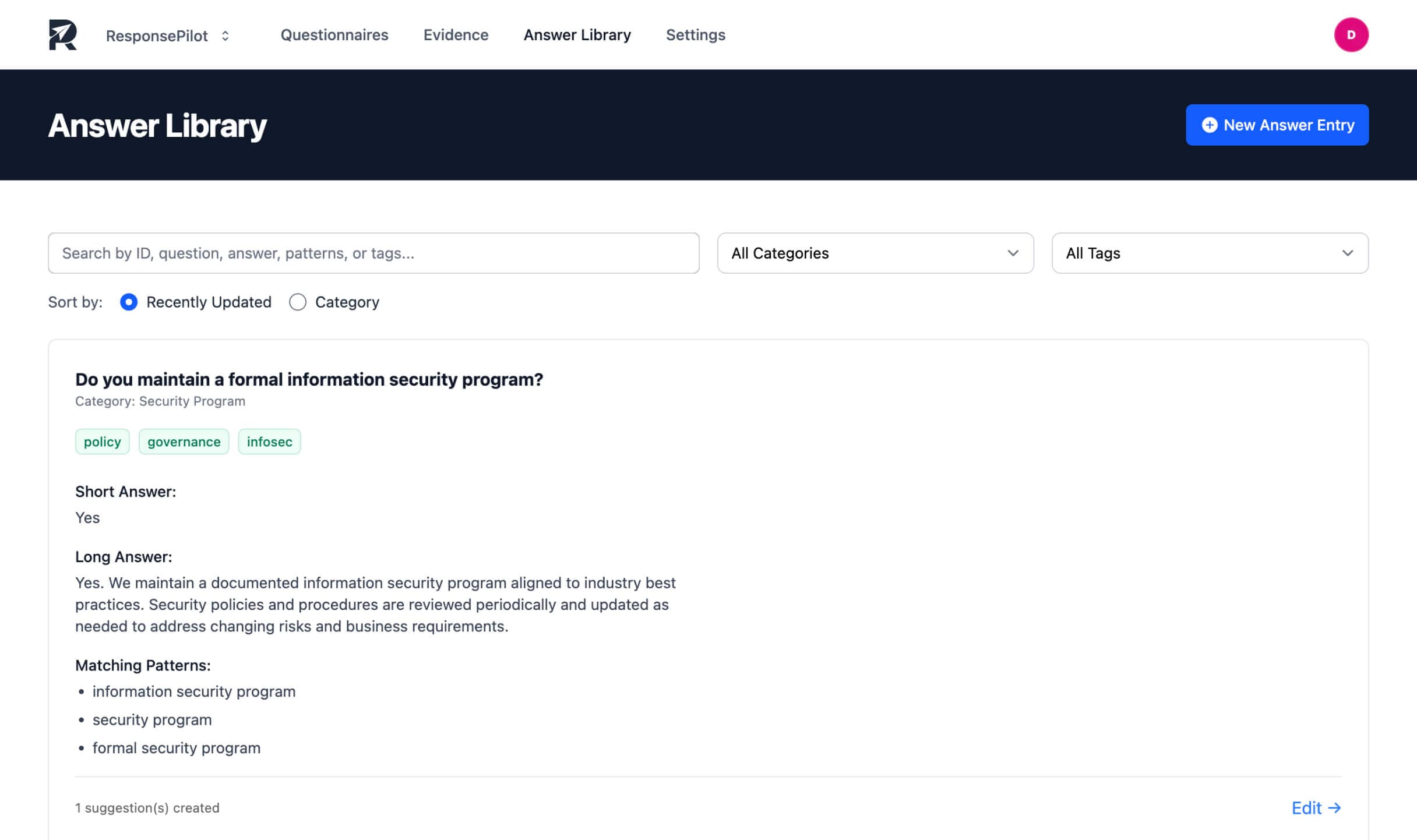
Instead of reacting, build a living answer library. This should contain canonical, approved responses to common security controls - written clearly, consistently, and reviewed periodically. When you centralize your answers, you eliminate the scavenger hunt across Google Drive, Slack, and last year's Excel file.
The goal isn't just reuse. It's controlled reuse. You want answers that are stable, versioned, and aligned with how your security program actually operates today.
Step 2: Standardize core controls
Security questionnaires often rephrase the same requirement in slightly different language. “Do you enforce MFA for privileged access?” might become “Are administrative accounts protected with multi-factor authentication?” or “Is two-factor authentication required for elevated users?”
These aren't three questions. They're one control expressed three ways.
By defining a standardized response to that control, you ensure consistency across all questionnaires. Consistency builds credibility. When a buyer compares answers across different reviews - which they sometimes do - your responses won't contradict themselves.
Step 3: Treat evidence as first-class
Buyers don't just want answers. They want proof.
That might mean referencing:
- A specific policy document
- A SOC 2 report section
- A log retention statement
- A vendor management procedure
Instead of attaching random documents each time, map evidence to your canonical answers once. When an encryption question comes up, you should already know which document supports it and which section to reference. This makes your response look organized and intentional rather than reactive.
Step 4: Preserve the spreadsheet structure
This all sounds quite trivial until you've broken formatting in a 300-row file and had procurement reject it.
Security questionnaires often contain:
- Locked cells
- Conditional formatting
- Hidden metadata columns
- Dropdown validations
If you copy answers into a new file or accidentally alter the layout, you risk creating unnecessary friction. Always work within the original structure and export it back intact. Professionalism in presentation matters more than most teams realize.
Step 5: Build a repeatable workflow
The teams that handle questionnaires well don't rely on memory or heroics. They have a repeatable workflow that includes:
- A maintained answer library
- Tagged controls by domain
- Evidence mapped to each control
- A consistent review process
- Post-review updates to improve future responses
Over time, this compounds. The first questionnaire may take hours. The fifth should take significantly less. By the tenth, you're mostly reviewing and approving rather than writing.
The bigger picture
Security questionnaires aren't going away. In fact, they're becoming more standardized and more thorough. Even small SaaS companies are expected to demonstrate mature controls around encryption, incident response, vendor risk, and data retention.
You don't need an enterprise GRC platform to handle this effectively. But you do need a process. When you treat questionnaires as operational workflow instead of emergency interruptions, they stop derailing your week.
The difference between chaos and efficiency is usually not better compliance - it's better organization.